What shoes you need for trekking in Nepal depends on the route. For day hikes and lower teahouse treks below the snow line, light hiking shoes with a grippy sole and a secure fit are usually enough. For high-altitude routes, snow, ice or cold high passes, you need proper insulated, waterproof trekking boots with ankle support.
Nepal has treks for every level, from a Saturday walk up Shivapuri to weeks on high mountain passes. Choosing footwear is easier once you are honest about where you are going. At Shikhar Shoes, a Nepali shoe maker in Kathmandu, we make hiking shoes for day hikes and lower trails, and we would rather tell you plainly when you need something heavier.
What Is the Difference Between a Day Hike and a Teahouse Trek?
A day hike is a walk you start and finish on the same day, usually with a small bag. Hills around Kathmandu like Nagarkot, Chandragiri and Champadevi, or Sarangkot above Pokhara, are typical examples.
A teahouse trek runs over several days, sleeping in lodges along the way. You walk five to seven hours a day, often on stone steps, for many days in a row. Some teahouse treks stay at lower and middle altitudes; others climb high, where nights are freezing and snow is possible even in the main seasons.
Which Shoes Are Right for Which Trek?
Here is a simple way to match footwear to the trip:
| Type of trip | Ground and weather | What to wear |
|---|---|---|
| Day hikes around Kathmandu and Pokhara | Dirt trails, stone steps, jeep roads, mostly dry in autumn | Hiking shoes |
| Short, low-altitude teahouse treks | Village trails, long stone staircases, mild nights | Well broken-in hiking shoes |
| Monsoon treks at lower altitude | Mud, streams, leeches, constant wet | Hiking shoes with deep lugs, plus spare socks |
| High-altitude treks and high passes | Cold, rocky moraine, possible snow and ice | Insulated, waterproof trekking boots |
| Snow, glacier or climbing routes | Deep snow, ice, crampons | Specialist mountain boots |
When Are Hiking Shoes Enough?
Hiking shoes are lighter, bend more easily and need less breaking in than boots. That makes them more comfortable on routes where you do not face snow, freezing temperatures or a heavy pack. They are a good fit when:
- You are doing day hikes or treks that stay well below the snow line.
- You carry a light day pack and a porter or lodge takes care of the rest.
- The weather is mostly dry, as it usually is in October and November.
- Your ankles are healthy and you are used to walking on uneven ground.
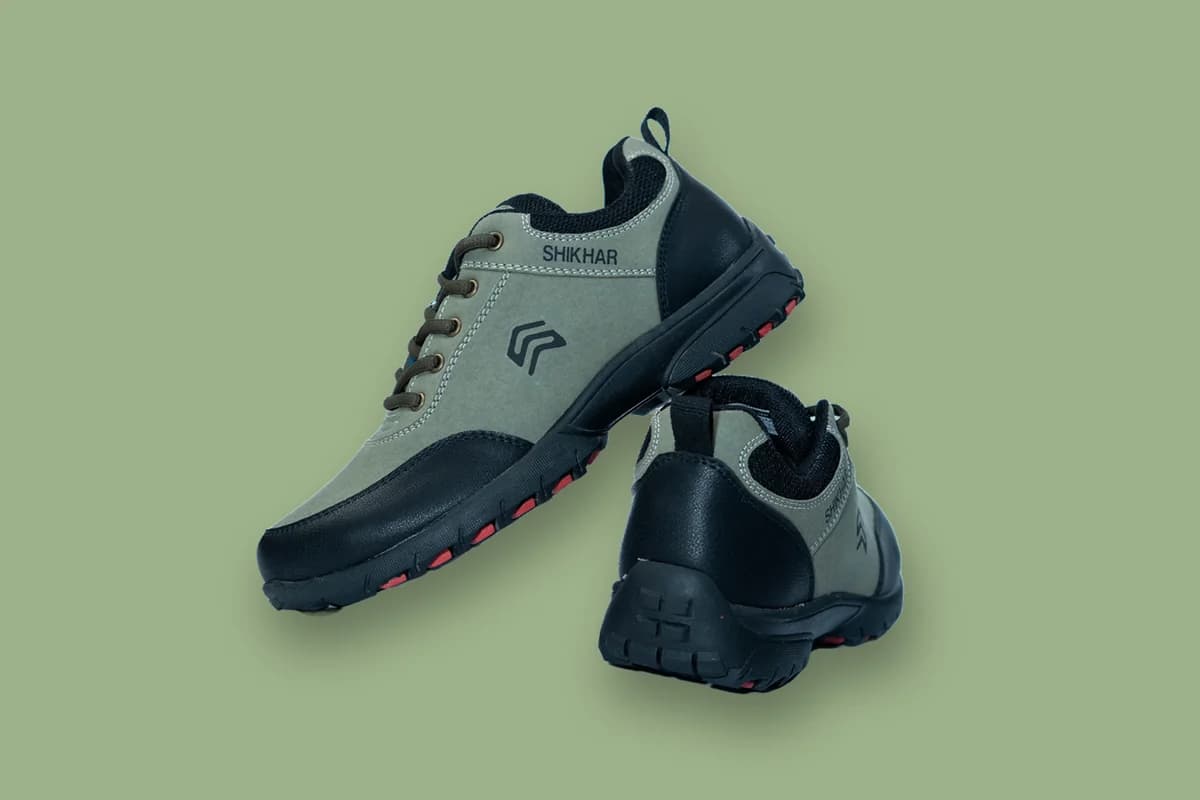
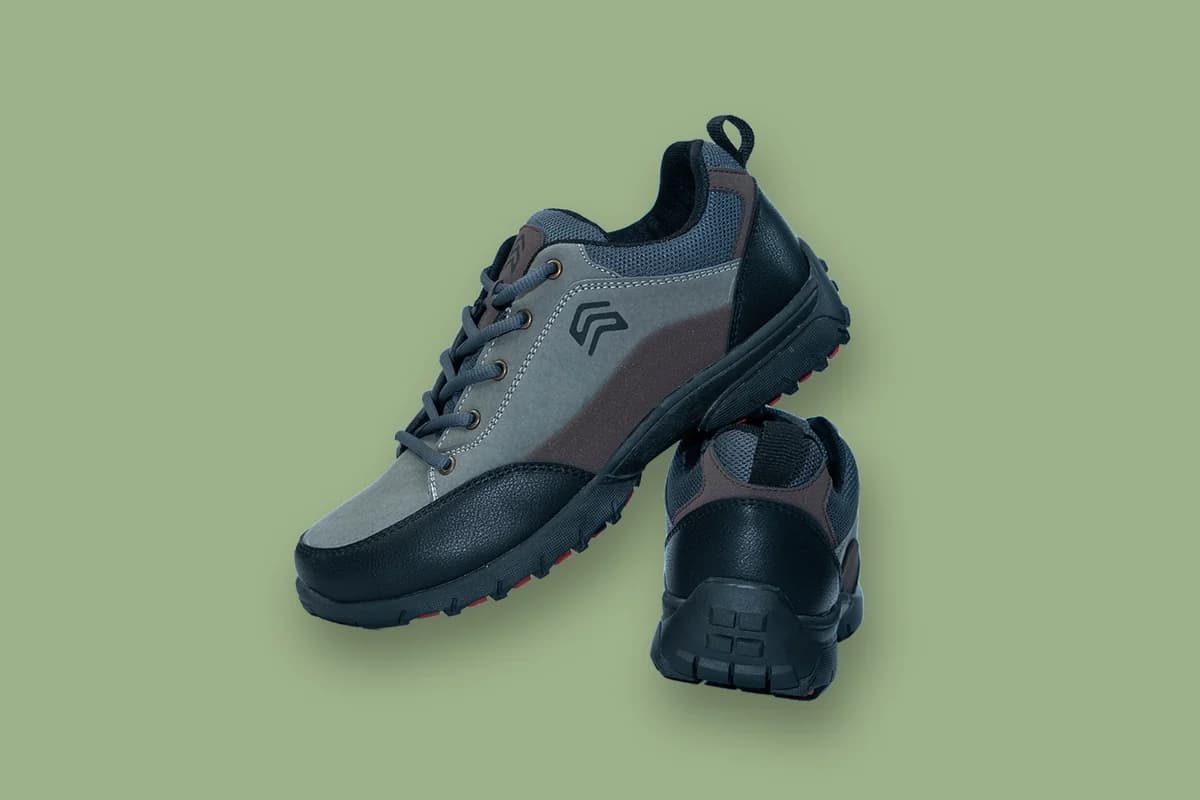
Shikhar's hiking shoes, including the SS149 and SS150, are designed for this kind of walking: day hikes, hill trails and lower routes.
When Do I Need Proper Trekking Boots?
We want to be clear: our hiking shoes are not made for snow, ice or very high altitude. On those routes, low hiking shoes can let in snow, leave your feet cold, and give less ankle support on long rocky descents. Choose insulated, waterproof trekking boots if:
- Your route goes to high altitude or crosses a high pass.
- Snow or ice is possible, which is common in winter and early spring and can happen in any season up high.
- You will carry a heavy backpack yourself.
- You have weak ankles or a past ankle injury.
If you are unsure about your route, ask your trekking agency or guide what conditions to expect, and buy for the hardest day of the trek, not the easiest.
How Should Trekking Shoes Fit?
Fit matters more than any feature. A good pair feels snug around the heel and midfoot, with room to wiggle your toes.
- Measure your feet in the evening, when they are at their largest. Our size guide shows how.
- Try shoes on with the socks you will trek in. Thick socks can change the fit by half a size.
- Leave about a thumb's width in front of your longest toe for long descents.
- Walk on a slope or stairs if you can. Your toes should not hit the front going down.
- Check your heel. A little movement is normal; sliding up and down causes blisters.
How Do I Break In Shoes Before a Trek?
Never start a multi-day trek in brand new shoes. Wear them around town for a week or two, then on a couple of day hikes such as Shivapuri or Champadevi. You will find any pressure points early and can adjust lacing or socks. Our guide to hiking shoes in Nepal has more on breaking in and caring for a new pair.
Key Takeaways
- Choose footwear for the hardest day of your trip, not the easiest.
- Hiking shoes suit day hikes and lower teahouse treks below the snow line.
- High-altitude, snow and cold routes need insulated, waterproof trekking boots.
- Fit is more important than any single feature: snug heel, room for the toes.
- Break in any new pair well before you leave for a trek.
Frequently Asked Questions
Can I do a teahouse trek in hiking shoes?
Yes, for many lower-altitude teahouse treks in dry season, well broken-in hiking shoes are comfortable and practical. For high routes with cold nights, snow or high passes, wear proper insulated trekking boots instead.
Are Shikhar hiking shoes suitable for high-altitude treks?
No. Shikhar hiking shoes are made for day hikes and lower trails. For high-altitude, snow or ice routes, choose insulated, waterproof trekking boots.
Should I take two pairs of shoes on a trek?
Many trekkers carry a light second pair, such as sandals or sports shoes, to wear at the lodge in the evening. It lets your main shoes dry and gives your feet a rest.
What socks should I wear for trekking?
Wool-blend or synthetic hiking socks that fit smoothly without wrinkles are a good choice. Carry at least one spare pair so you can change if your feet get wet.
What should I do if I get a blister on the trail?
Stop early, clean and cover the spot with a plaster or blister pad, and adjust your laces or socks. If a blister becomes very painful, red or swollen, see a doctor or health post.
Planning a day hike or a lower trek? Explore our hiking shoes, order online with cash on delivery anywhere in Nepal, or visit one of our stores to try them on.