Formal shoes should fit snugly at the heel, with about a thumb's width of space beyond your longest toe, and enough width that the sides do not pinch when you stand. The laces should close with a little gap left. Always try them on in the afternoon, wearing the socks you plan to use.
In Nepal, formal shoes often work long days: office hours, a wedding, a bus ride across Kathmandu and back. Shikhar Shoes, a Nepali maker since 1995, has seen how a pair that feels fine in the shop can hurt by evening, so this checklist focuses on what to test before you buy.
How should the heel of a formal shoe fit?
The heel is the first thing to check. It should feel held, not squeezed. Your heel should stay put when you walk, with only a tiny lift at the back.
- Walk a few steps and feel for the heel sliding up and down.
- A little movement in a new leather or PU pair is normal; it settles as the shoe softens.
- If the heel slips a lot, the shoe is likely too big or too long.
- If the back edge digs into your ankle bone, the shoe is too tight or the shape does not suit you.
How much space should I leave at the toe?
Stand up with your weight on both feet. Press down on the front of the shoe and check for roughly one thumb's width between your longest toe and the end. Your feet spread and lengthen when you stand and walk, so a shoe that touches your toe while you sit will feel too short by afternoon.
Your toes should also be able to wiggle a little. Pointed styles taper at the front, so check that the tip does not press on your smallest toe.
How do I know if a formal shoe is wide enough?
Width is where many people go wrong. Look at the widest part of your foot, near the base of the toes, and check how the shoe sits there.
- The upper should not bulge or crease sharply over the sides of your foot.
- You should not feel pressure on the little toe or the bump on the big toe joint.
- If your feet are broad, read our guide on finding comfortable shoes for wide feet.
How tight should the laces be?
With a lace-up, tie the laces as you would to wear them all day. The two sides of the lacing should not touch, and they should not be so far apart that the shoe is nearly open. A gap of about one finger is a good guide.
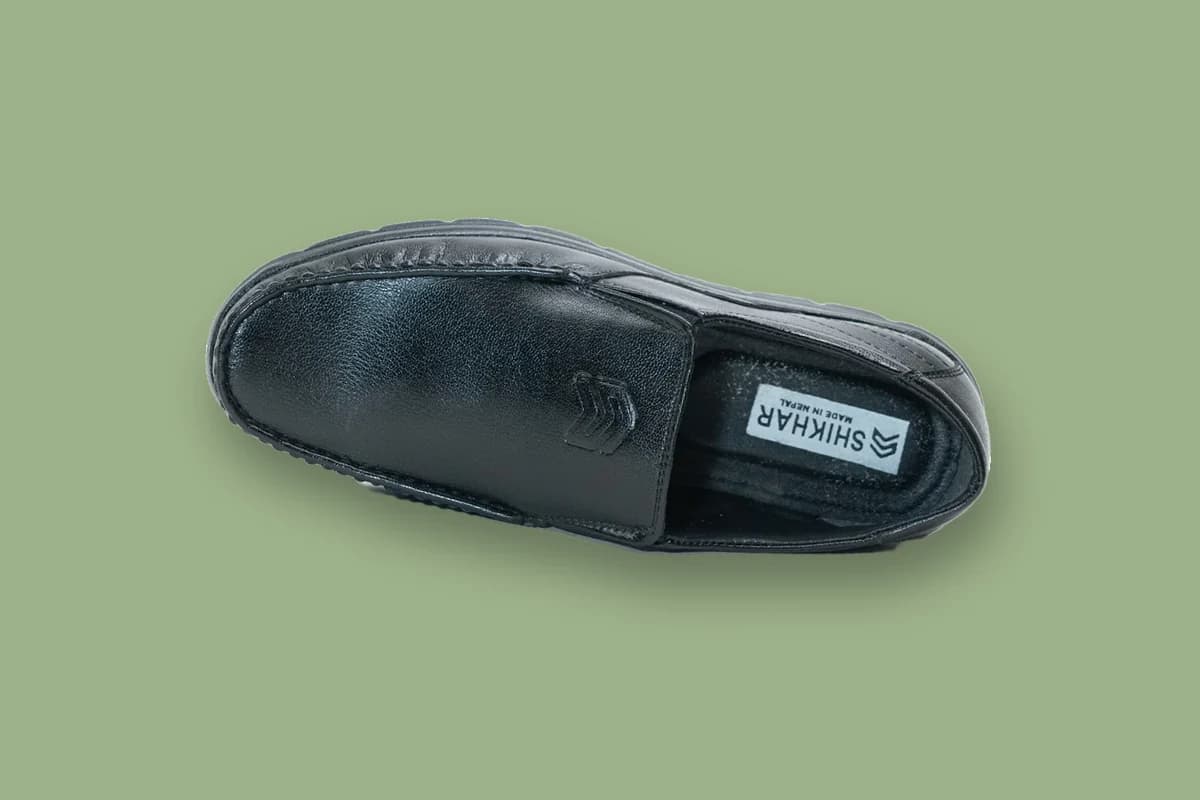
If the sides meet fully when laced, the shoe is probably too wide for you. If they are far apart, it is probably too narrow. Slip-ons have no laces to adjust, so for those, heel hold and width matter even more.
What is a quick formal shoe fit checklist?
| Part of the shoe | Good fit | Warning sign |
|---|---|---|
| Heel | Held firmly, tiny lift | Slips with every step |
| Toe | About a thumb's width of space | Toe touches the end |
| Width | Comfortable at the widest point | Pinching on the sides |
| Laces | Small gap when tied | Sides touch or are far apart |
| Instep | Snug, no pressure | Tight band across the top |
What should I do before trying formal shoes on?
- Shop in the afternoon, when your feet are at their largest.
- Wear the socks you usually use with formal shoes.
- Measure both feet, because they are often slightly different. See why in why one foot is bigger than the other.
- Fit the bigger foot, then add insoles or thicker socks if the other feels loose.
- Walk on a hard floor for a few minutes before deciding.
If you are not sure of your size, our size guide and the article on measuring your feet at home will help. Sizes on the site are EU sizes, and most styles run from EU 39 to 44.
Is it OK to buy formal shoes a little tight?
No. A formal shoe will soften slightly with wear, but it will not grow a full size. Leather and PU both give a little at the upper, yet the sole and the length stay the same. If a shoe hurts in the shop, it will usually hurt at the office too.
It is better to choose a slightly different style or size than to hope it will stretch. If you feel pain that does not go away, see a doctor or a foot specialist.
Key Takeaways
- Leave about a thumb's width of space beyond your longest toe.
- The heel should be held firmly, with only a tiny lift.
- Check width at the widest part of your foot, not just the length.
- Try shoes on in the afternoon with your usual socks.
- Fit your bigger foot and walk around before you decide.
Frequently Asked Questions
Should formal shoes feel tight at first?
They should feel snug and secure, not painful. A small amount of firmness is normal, but pinching or pressure points mean the shoe is wrong for your foot.
Do leather formal shoes stretch?
Leather can soften a little across the upper with wear. It will not become longer, so choose the right length from the start.
What if one foot is bigger than the other?
Buy for the bigger foot and use a thin insole or thicker sock on the smaller side if it feels loose.
Which socks should I wear when trying on formal shoes?
Wear the same kind of thin dress socks you will use with them. Thick sports socks can make you pick a size that is too big.
Can I order formal shoes online and still get the right fit?
Yes, if you measure your foot first and compare it with the size chart. Our shop uses EU sizes, and the size guide explains how to measure.
Ready to find your pair? Browse our formal shoes, or visit one of our Shikhar stores to try them on in person.